
Colonel (Ret.) Dave Sale

During the latter part of his Army career, Colonel Sale played a significant role in the introduction, development, and fielding of the AH-64A Apache attack helicopter. He served as the U.S. Army Training and Doctrine Command (TRADOC) System Manager (TSM) for the Apache, helping shape the Army’s integration of what would become its premier attack helicopter. While serving as the Apache TSM, Colonel Sale also found time to complete the demanding qualification requirements to become a rated AH-64A Apache aviator, giving him firsthand experience in the aircraft whose development and fielding he was helping to lead.
Colonel Sale later served as the U.S. Army Europe Apache Fielding Chief, where he helped lead the fielding of six Apache battalions and squadrons in just three years—an important milestone in bringing the Army’s new attack helicopter capability to operational forces in Europe.
His final Army assignment was as the TRADOC System Manager for the Apache and Hellfire Missile systems. He retired from active duty in September 1993 after a career spanning combat aviation, command, training, doctrine, weapons-system development, and operational fielding.
 Following his Army retirement, Colonel Sale continued his association with the Apache and the Army Aviation community through a second career with McDonnell Douglas and Boeing. His responsibilities included Apache business development, program management, and leadership of Apache field service activities, allowing him to continue supporting the aircraft, its crews, and the worldwide Apache community.
Colonel Sale has also devoted considerable time to preserving America’s military aviation heritage and serving the veteran community. He has helped establish and support several nonprofit organizations, including the Army Aviation Heritage Foundation Southwest Chapter, the Commemorative Air Force, and Above the Best.
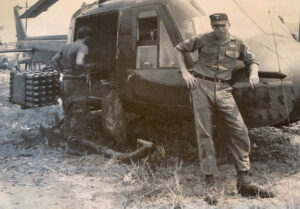
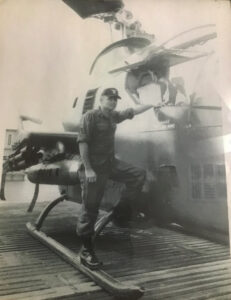
From flying Hueys and Cobras in Vietnam to becoming an Apache aviator and helping lead the fielding of the AH-64A, Colonel Sale’s career spans multiple generations of Army attack aviation. His military and civilian service reflects a lifelong commitment to Army Aviation, its people, its history, and the legacy of those who served.
He continues to enjoy working with people, supporting the military aviation community, and, in his words, “getting the most out of life.”
A 501(c)(3) Nonprofit Organization